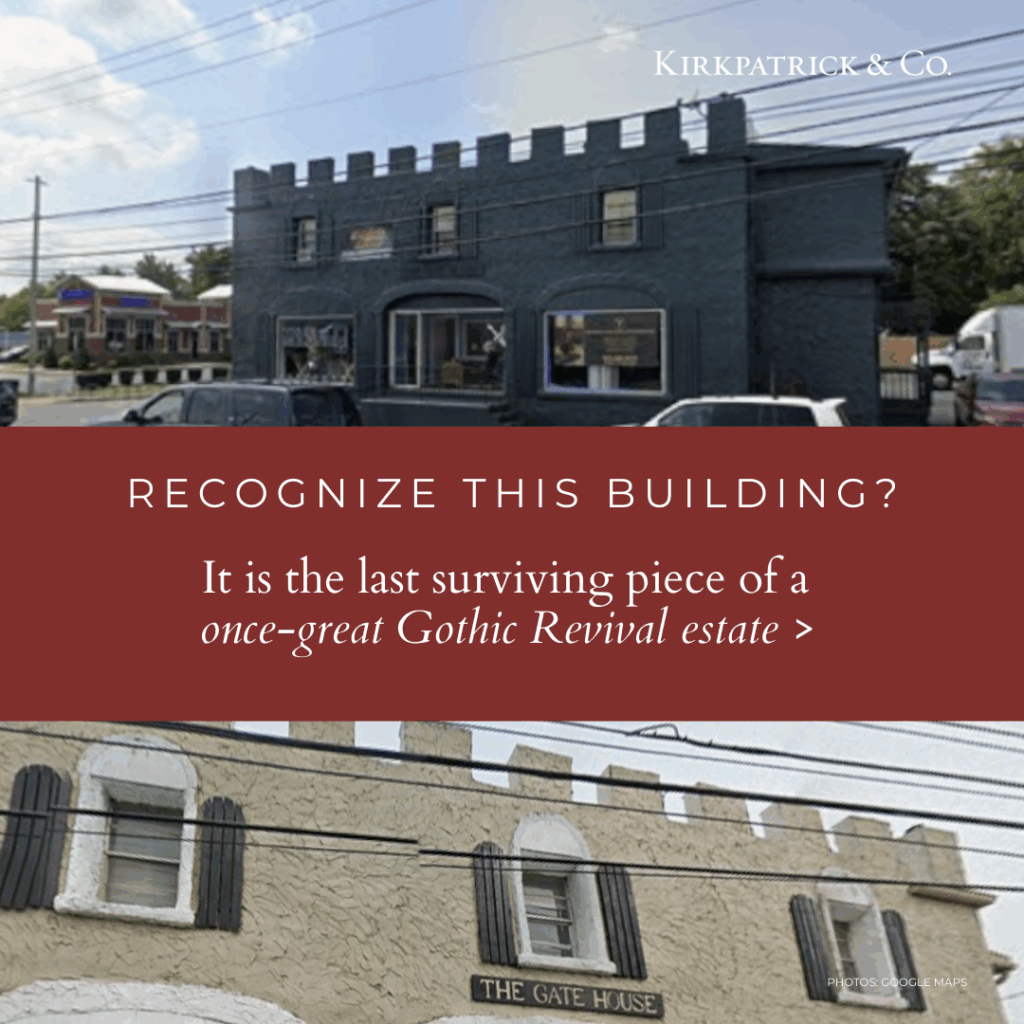
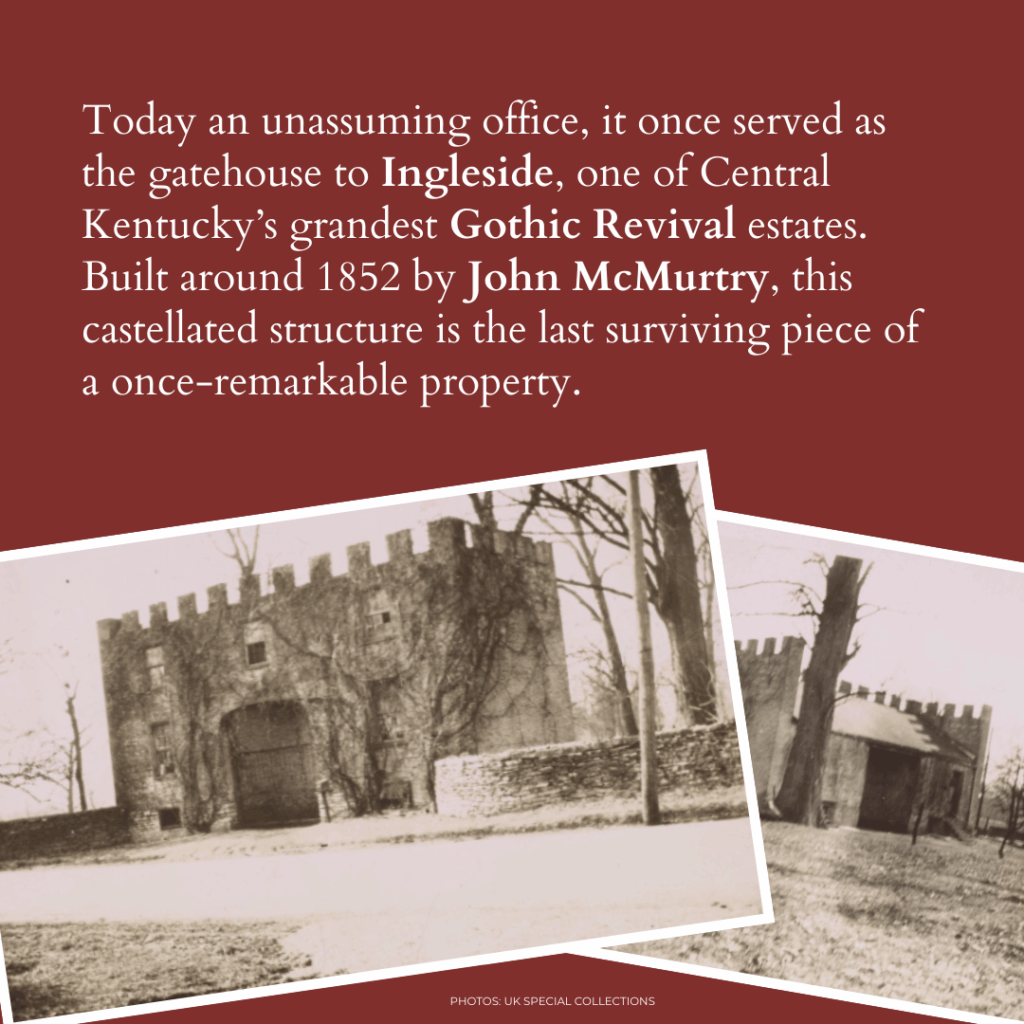
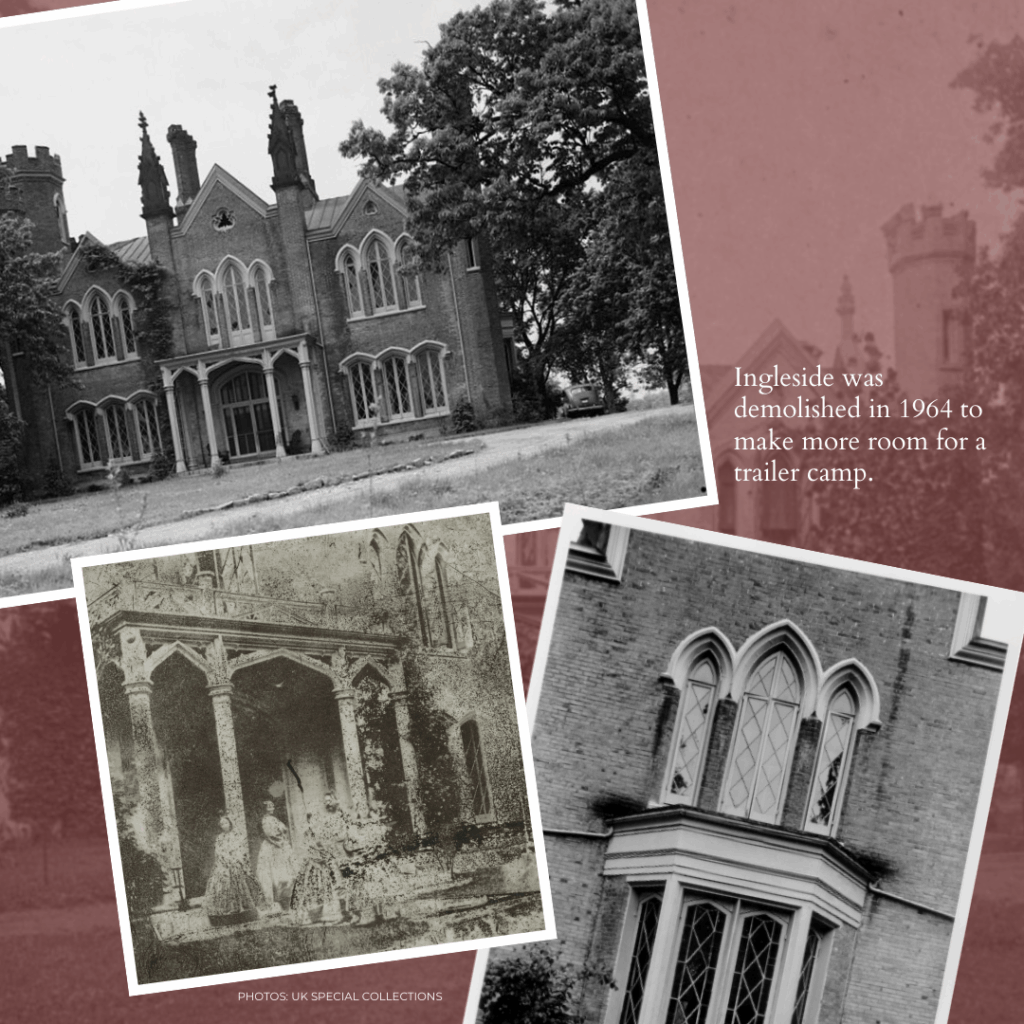
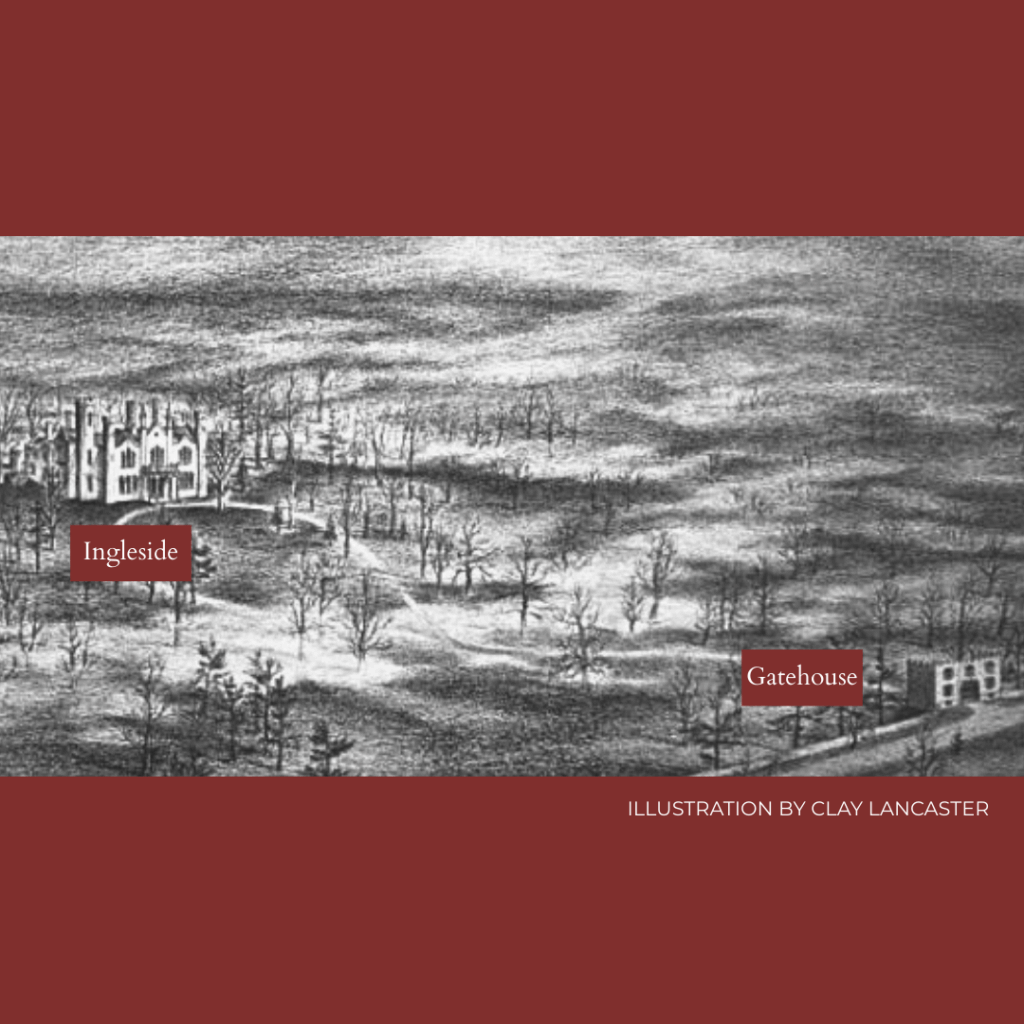
Recognize this building in any of its iterations? This unassuming office building is now the last vestige of a once great Gothic Revival estate. The castellated structure was originally the gatehouse for the remarkable “Ingleside.” Built by architect John McMurtry c.1852, it was once one of the finest examples of the Gothic Revival style in Central Kentucky.
The Gothic Revival in Central Kentucky
While Central Kentucky is best known for its Federal & Greek Revival residences, some of the most evocative are in the Gothic Revival Style. Most popular before the Civil War, the Gothic Revival architectural style reflects 19th century Romanticism. Strikingly different from the simple classical forms seen in the Greek Revival style, the Gothic style conjured the medieval tales & Gothic novels popular in the early Victorian era.
Gothic Revival buildings were often medieval inspired with a focus on “picturesque” aesthetics including irregular, dramatic forms. Practitioners of the style believed the contrast between “rude” and wild (and sometimes even decaying or “ruined”) and structured produced an effect that transcended mere beauty.
The Gothic Revival style in America was heavily influenced by Andrew Jackson Downing (and his illustrator/collaborator, Alexander Jackson Davis) with the publication of influential house plan books including Rural Residences (1837), Cottage Residences (1842), and The Architecture of Country Houses (1850).
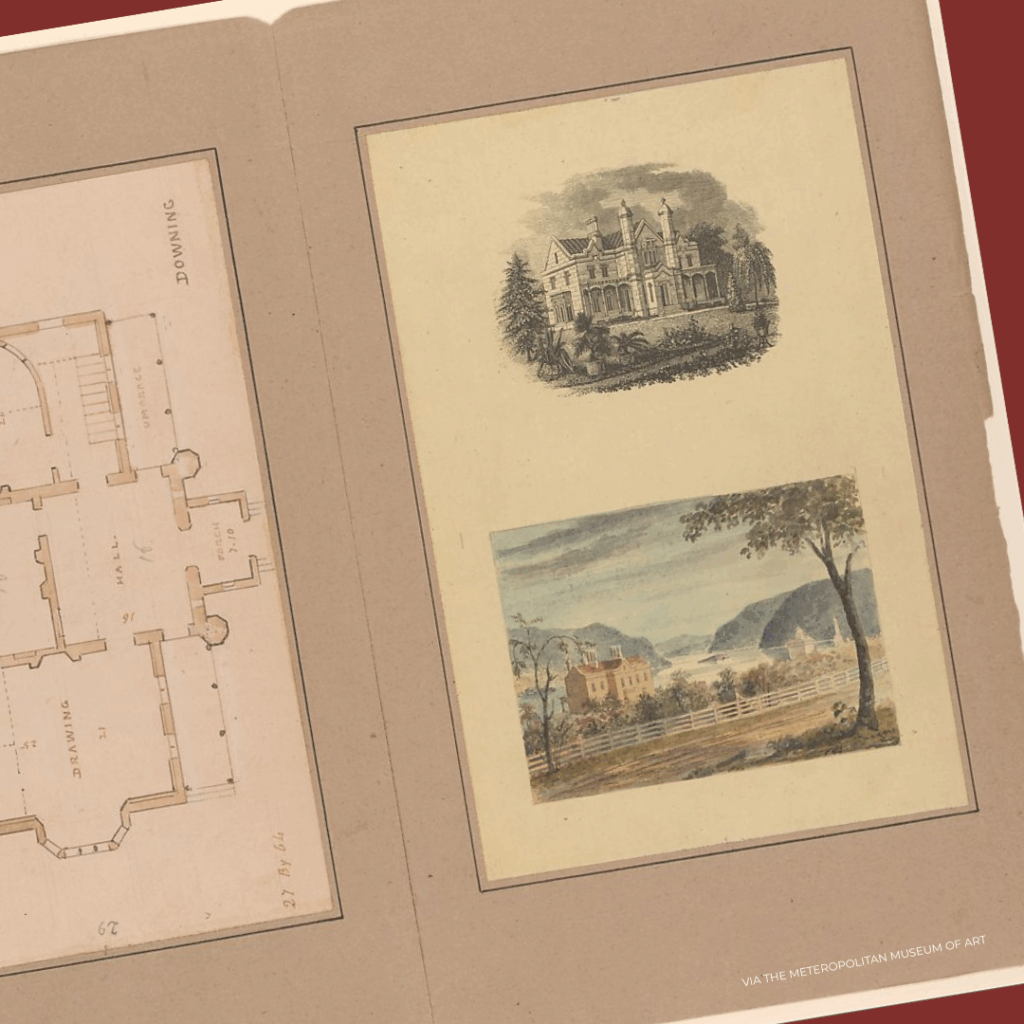
Here, the Gothic style was promoted as most appropriate in rural settings, with its complex and irregular forms fitting well into the wild natural landscape. The Central Kentucky rural landscape, then, proved a perfect backdrop for these romantic homes.
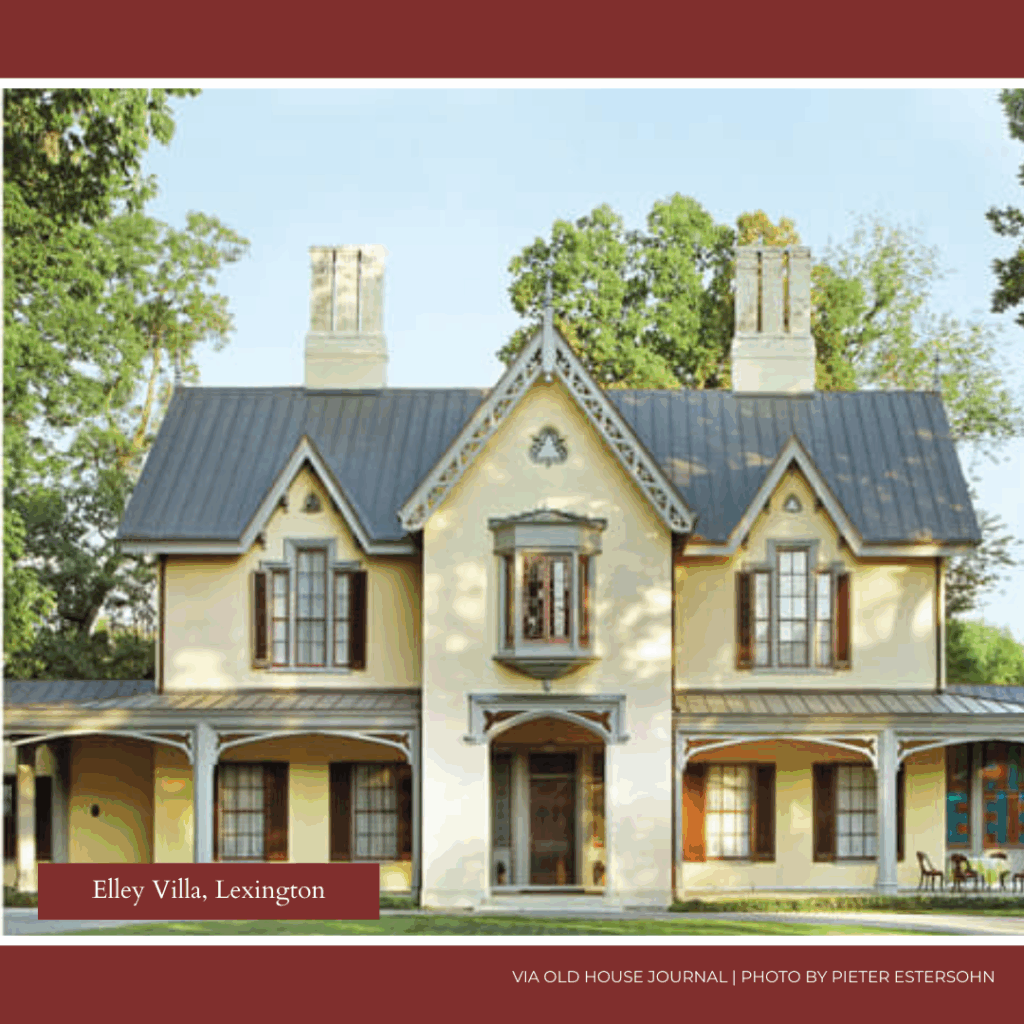
Technological advancements, too, contributed to the blossoming of the Gothic Architecture movement in the United States. The invention of the scroll saw allowed American woodworkers to create intricate, lace-like decorations (“gingerbread”) on wood-frame houses. Whereas European forms most often included stone, the wooden “Carpenter” Gothic Style was less expensively built with America’s abundant timber- and allowed for greater ornamentation.
Relying heavily on the popular plan books, Kentucky architect John McMurtry constructed the best-known collection of Gothic residences in Central Kentucky including Loudoun, where he served as builder for A.J. Davis’ design. McMurtry also constructed “Aylesford” (now known as the Elley Villa), the Paris and old Lexington Cemetery gatehouses, and Old Episcopal Burying Ground Cottage/Chapel, as well as Botherum, which marries Gothic elements with Greek Revival style.
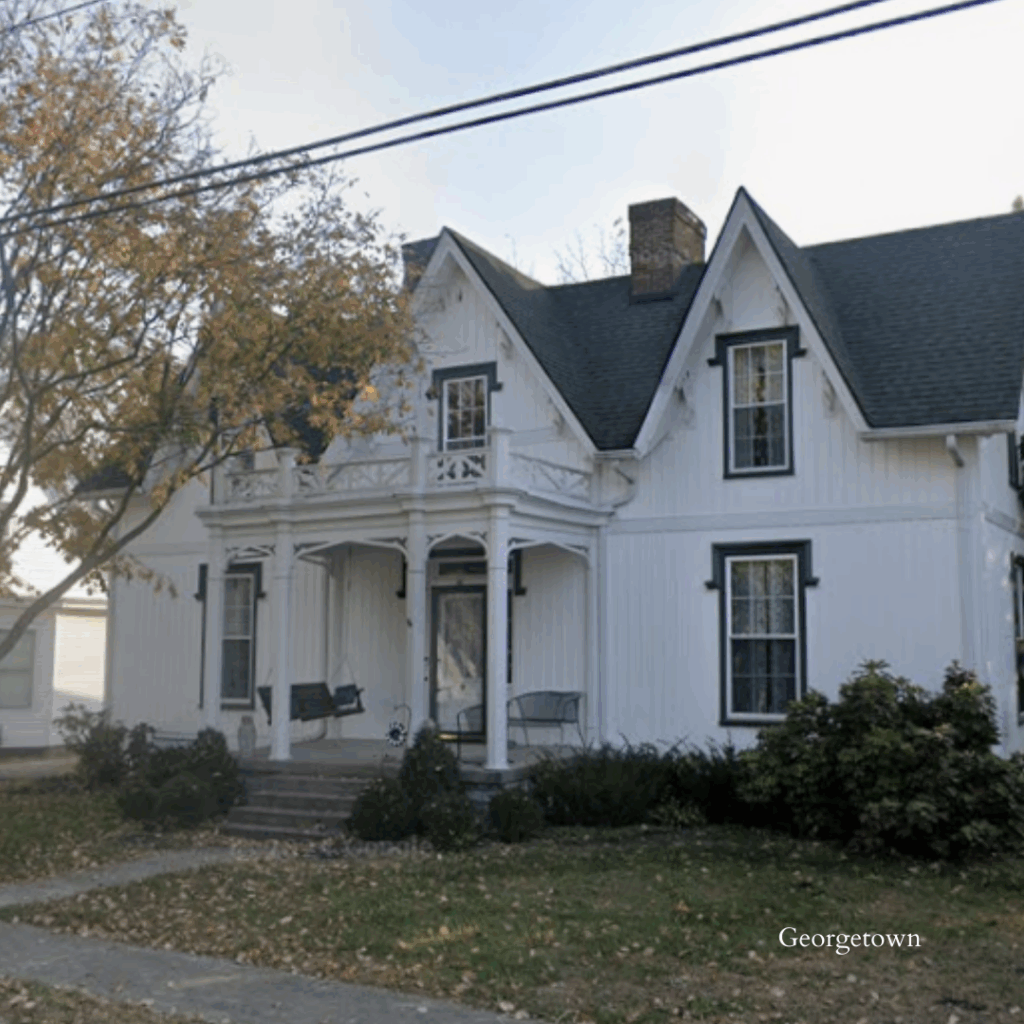
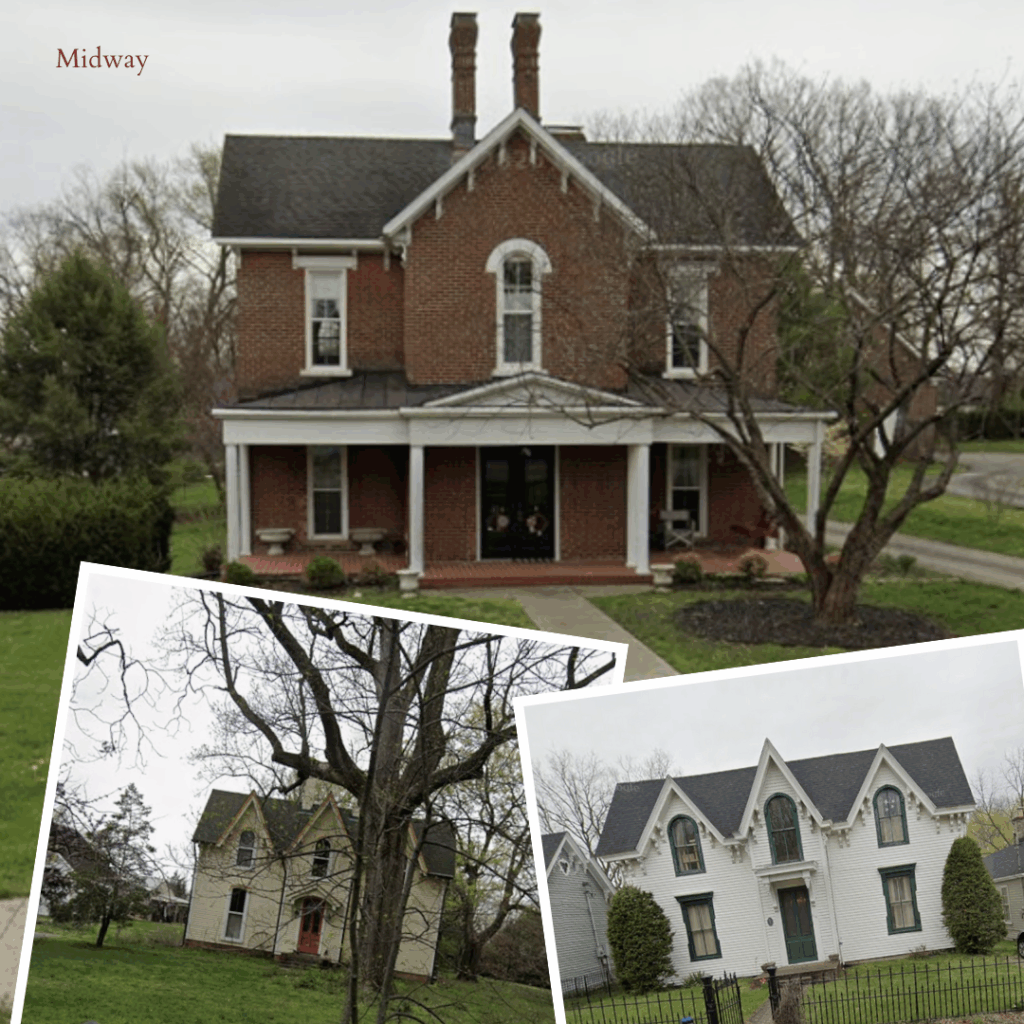
In Midway, German émigré builder, merchant, & funeral home operator David Lehman, turned out numerous homes in the Gothic Revival style, including the oft-admired “Wincoma”.
Across the countryside, you can still find vernacular homes with a hint of Gothic style throughout Central Kentucky. Perhaps a new appreciation for these striking and quirky residences is the perfect antidote to today’s gray, watered down post-modernism.